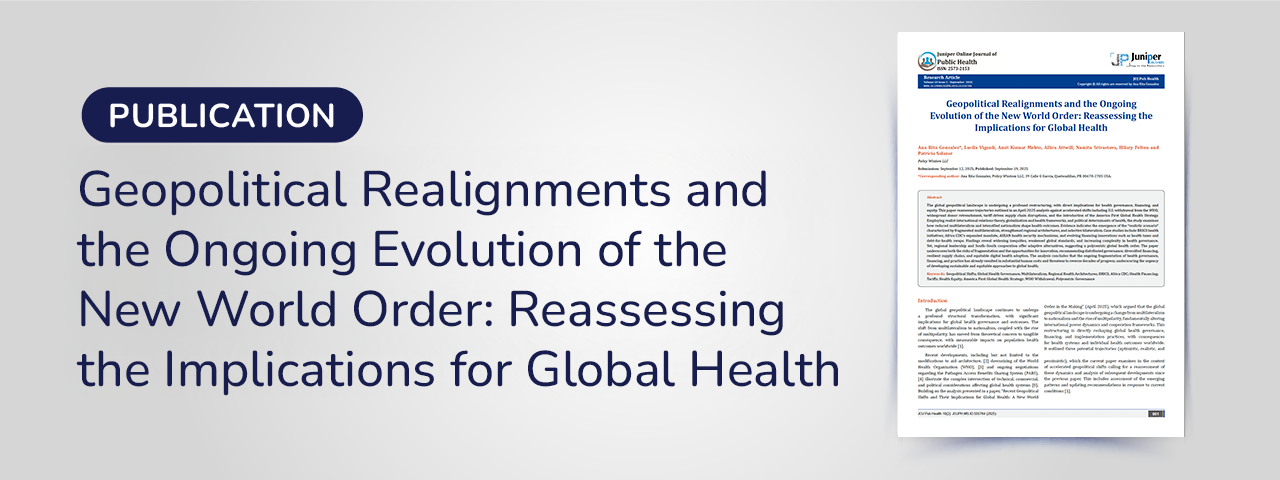
This article explores how recent geopolitical shifts—including the U.S. withdrawal from the WHO, donor funding cuts, tariff-driven supply chain disruptions, and the “America First Global Health Strategy”—are reshaping the global health landscape. It argues that a realistic scenario of fragmented multilateralism is emerging, marked by weakened international institutions, rising nationalism, and stronger regional health architectures such as BRICS and Africa CDC. While these changes threaten decades of progress in equity and global health governance, they also open opportunities for innovation, South–South cooperation, diversified financing, and resilient supply chains.
The paper calls for adaptive governance and sustainable strategies to prevent widening inequities and to safeguard global health in a rapidly evolving world order.
Link of article: https://juniperpublishers.com/jojph/JOJPH.MS.ID.555784.php